
One thing people caught up in cults hate is being told they are in a cult. Does the Bible support such behavior? Are Christians commanded to evangelize and warn those caught in cults or leave them be? Pastor and professor Tony Costa from Toronto Seminary and Toronto Apologetics joins me to discuss this vitally important subject and the biblical basis for marking and calling out cult organizations such as Seventh-Day Adventism, Jehovah’s Witnesses, Baháʼí, Unity, Christadelphians, Islam, Mormonism (LDS), etc.
📺 Become A MEMBER & Get Exclusive Content: https://www.youtube.com/channel/UCvJSlIZyiDoM8uj6EhDz8aw/join
❤️ PARTNER with our Ministry: https://answeringadventism.com/
👍 LIKE us on Facebook: https://www.facebook.com/AnsweringAdventism
📷 FOLLOW us on Instagram: https://www.instagram.com/answeringadventism/
✏️ SHARE your testimony: https://linke.to/NEyH
Video Transcript
Hey there. As always, welcome and thank you for being here, especially if this is your first time with us, Adventist or otherwise. And happy Monday Thursday if you are a Christian. But I’ve got a question for you. Question of the night, if you will. I don’t know if we’ve ever had a question of the night. We typically have a question of the day. Is countercult apologetics biblical? That’s the topic of discussion tonight. And I have the perfect guest to help us assist in answering that question. Now, you may not and you might be wondering, why are we addressing this specific
Claim? Well, glad you asked. A common claim that this platform hears from 7th Adventist is some variation of the claim that what is being done here is not biblical and explicitly goes against the teachings of Jesus. This is typically downstream from uh the contention that the SDA church is emphatically not a cult. So, we’re going to explore this tonight. We’ll look at what a cult is. explore if the SDA church fits the bill, followed by what the scriptures have to say regarding countercult efforts and if they are or are not in line with scripture. But before we get into it,
If you like what we are doing here, you can support us by becoming a channel member. For the price of about a cup of coffee a month, you can not only help us reach more Seventh Day Adventists with the truth, but you will gain access to our growing library of membersonly content, including access to come engage at our membersonly live streams where we work through uh any questions that you might have and do some more hands-on type engagement. We get a lot of emails. We’re kind of backed up with emails. I’m the one that has to respond typically to
All of email uh all the emails that come through. And so there’s only so much time in the day. So sorry if you have sent through a question. Um sometimes your question requires a very thorough response that typing out um we just do not have the time to do. So this is the perfect opportunity for you to be able to ask those questions and get hopefully uh a succinct and quick answer if it’s possible or at least an in-depth one that is then also recorded and you can go back and check that at your leisure. If this is something of interest, click the little join button down below this
Video. Use the link in the description box or you can visit our channel homepage where you’ll find the same one like what is on screen. Your support really does make a huge difference and this work would not be possible without you. With that said, to help me discuss tonight is Dr. Tony Costa. Dr. Costa has a BA and an MA in the study of religion and philosophy from the University of Toronto and a PhD in theology and New Testament from Radbod University in the Netherlands. His area of expertise is apologetics in the areas of biblical and systematic
Theology, cults, and comparative world religions. Dr. Costa also teaches at the Toronto Baptist Seminary and is an ordained minister of the gospel. Brother, thank you so much for being here. I always enjoy talking to you. Always a pleasure. Always a pleasure, Miles. Thank you for having me on. Absolutely. So, let the audience know how you got involved in countercultics and how long have you been engaging in such. Well, it all goes back uh to my teenage years. I was raised in a very religious Roman Catholic home and uh many of my relatives uh a number of them actually
Were Roman Catholic priests. I still have a a second cousin alive in Portugal who’s uh who’s still a Roman Catholic priest. I’ve shared the gospel with him numerous times. I came to know the Lord when I was 15 years old. Um I was actually challenged by two of my cousins who came to faith in Christ and uh they had told me that they were born again and that uh that the Roman church was in error. It was in teaching the gospel of grace. Well, I was uh very upset by that and I set off to prove them wrong. I got a copy of the Bible. My first Bible was
A King James version I bought and I read from Genesis through to Revelation with the intent of proving my cousins wrong. Never read the Bible in my life. And the Lord used the Bible, the word of God to convert me. And so at the young age of 15, I came to faith in Christ. Um about a year or two after that um I almost fell prey to a very dangerous cult. Um and that cult back in the 1980s mid 1980s was known as the worldwide church of God. Uh and it was founded by Herbert W. Armstrong. Um the Worldwide Church of God today has broken off from Herbert
Armstrong and claims to have returned to evangelicalism. But there have been many offshoots and breakoffs. When Herbert Armstrong died, um the church fractured into splinter groups. Um and so there’s still a lot of these Armstrong itite, uh cults today. Because of that experience, uh that I almost fell prey to this cult, the Lord led me to to read Dr. Walter Martin’s book, The Kingdom of the Cults. And when I read the Kingdom of the Cults, and I saw the worldwide church of God mentioned in the table of contents, I was absolutely shocked to the core. And
The Lord used that to wake me up to the threat of the kingdom of the cults, the world of the cults. And I still remember as if it was yesterday. I was about 17, 18. And the Lord shook me. And I knew what I knew that I knew. And that day that he had called me to apologetics. And I know a lot of folks talk about, you know, the Lord told me this, the Lord told me that, but I could say with certainty that the Lord really convicted my heart that he had called me to defend the gospel, to defend the faith once for all delivered to the saints. And so, um,
I was planning to be a veterinarian. I loved animals. I wanted to study veterinarian medicine. And the Lord had other plans. And so I had a passion for students and and I knew right away that if I’m going to reach out to students in the academic arena, um I need to get to university and and earn post-graduate degrees. And so the Lord led me uh to go into higher education as you read in my bio there. Uh I did my bachelor’s and masters at the University of Toronto because I also work at the university. I was able to do these courses gratus for free and um and and that was a huge
Blessing that I didn’t go into debt because of that. And the Lord led me to a a very faithful local church in my neighborhood. I was trained uh by the pastor to to to pastor and and to prepare for the ministry. And so I I eventually uh was ordained um uh by the uh the in the evangelical church in the Baptist. Uh I’m a reformed Baptist by profession. Um and then I went to do my PhD and I studied my PhD uh under Professor Yan Vanderwit who was a leading uh scholar in Johannine studies, the study of John’s gospels and the letters and the apocalypse, the
Revelation. and I did my PhD uh on theology and the New Testament and uh my doctoral dissertation was published uh it’s entitled the um uh worship and the risen Jesus in the Pauline letters uh published in 2013 by uh Peter Lang publishers and I’ve also written other books like early Christian creeds and hymns that’s uh that’s also been published I have a forthcoming book that’s going to be out in about maybe a month and a half or so God willing called No King but Christ uh and the subtitle is the bankruptcy and collapse of secular world views. So, it’s more of
A contemporary book dealing with our modern world and the challenges the church faces and society at large and why we are where we are in the mess that we are today. Um, so the Lord put me where he wanted me and that is to defend the gospel and and so over the years uh Miles I I’ve uh shared the gospel with countless Jehovah’s Witnesses. It’s gotten so bad that I’ve even videotaped them. I put it on my YouTube channel on my shorts that they deliberately skip my house. They they’ve been told by Watchtower headquarters to avoid me at all costs. And so I try to engage them
Outside when I see them pass by. I’ve engaged with Mormons. Uh I’ve engaged with Seventh Day Adventists as well. The Lord has uh I’ve seen the Lord bring uh Mormons to Christ, Jehovah’s Witnesses to Christ. The Lord’s brought Seventh Day Adventists like yourself to Christ. I’ve seen the Lord bring uh Hindus to Christ, Muslims. A lot of my ministry is also involved in reaching out to Muslims and uh and even Jews uh Jews coming to faith in in the Messiah Jesus. Um so that’s where I am at this point. I I do teach with the Toronto Baptist Seminary.
Uh I specialize I teach in particularly the areas of apologetics and and and systematic theology and philosophy. And I’m also an instructor with the University of Toronto. I teach archaeology of the ancient near east and the Bible. And I also teach on on gospel studies. And so um I’ve also engaged in public debates um Mormons, atheists, Muslims for some reason. Seventh I did debate a 7th day Adventists. I stand corrected. I did debate a 7th Adventist a number of years ago. Uh and it was on uh whether uh the Sabbath uh do Christians are Christians obligated to
Keep the 7th day Sabbath to be saved? And so that was at a university here in Canada called York University in Toronto. And that debate’s also available on my YouTube channel. And so I pray that the Lord planted a lot of seeds there. And I’m praying that a lot of 7th Day Adventists uh came to see the the errors of LG White and the Pioneers. But so that’s pretty much it uh Miles that that I can recall. Uh so I’ve been involved in this ministry for about um 40 years. So I I started around 18. Uh I’m now 57 well 57 I guess and a quarter. Uh, so I’d say roughly 40 years
That I’ve been involved in this ministry. You know, you said a lot of people talk about having a word or hearing from God, etc. But when you knew, you knew. Yes. And that’s what you’re you’re really getting at there. And that’s so true because not everybody’s called to this. And I think that’s good to kind of uh preface with in terms of not every person is necessarily called to uh countercult apologetic ministry. Um but there is a need for it. There is a need for it and as you have so um you know shown us through your um quick overview there that
People need reached and that’s ultimately what the goal is. So now I want to transition to exactly that. I’ll have a question for you regarding the goal of counter cold apologetics. But before then I want to read you a definition here and get your thoughts. So the second way to define a cult according to the Christian Research Institute, we don’t need to get into Hank Hanigraph and and any of that sort of stuff, but just the definition here. The second way to define a cult is popular in evangelical Christian circles. From this perspective, a cult is any group that deviates from
The orthodox teachings of the historic Christian faith being derived from the Bible and confirmed through the ancient ecumenical creeds. Tony, is this how you would define a cult or what way would you define a cult so that people understand what you’re saying? Because I think pop culture has influenced this in a lot of people’s minds. Um, they kind of have this idea of, oh, a cult is a group that has a maniacal leader where they do all these sorts of heinous sorts of things. Um, how are we using that term when we talk about countercultics? Yeah, I think context is important. As
You know, Miles, a word means what it means in context. And so the word cult you know if you look at dictionary it has a a number of meanings. The word cult can be used as a ver as a reference to a worship like the cult of the virgin Mary for example. But in in in the context of evangelical Christianity a cult is the word cult uh cultist means it just means a group in Latin a group uh a group of people. Um, and it has to do in in in in an evangelical context to do with a group that is surrounded around a particular figure who is either someone who claims to be a prophet,
Someone who claims to be a messenger from God or the last days messenger. It could be an organization like the Watchtower. And they’re they they revolve around this particular group, this person, this prophet, this messenger. And they cling to their own unique interpretation of scripture. But they also break off from historic Christianity in denying the fundamentals of the Christian faith. Uh and so the trinity, the deity of Christ, salvation, uh particularly salvation by grace alone in evangelical theology. Um they deny the bodily resurrection of Christ. They
Deny his eternal sunship. Uh they deny um his return in the flesh in the body uh like Jehovah’s Witnesses. So there’s a denial of the historic uh Christian creeds or the historic Christian fundamentals of the faith, but it’s more than that. They all claim to be a restoration of the gospel that was lost. And so the idea is there was this this this darkness that came over the church usually after the death of the apostle John and there was this apostasy that went on in the church. And so God called a certain person to restore the gospel to its purity, its original form. That
Could be Joseph Smith of the Mormons. It could be LG White of the Seventh Adventist, Charles Russell of the Jehovah’s Witnesses and or or or or it could be uh any any figure that uh that claims to have found the truth or restored it. You Herbert W. Armstrong is another classic example. Um and every cult makes this claim whether they’re Chrisadelfians, whether they’re uh Unity School Christianity, Christian Science, all of them make the same claim. we are the restoration of the gospel that was lost. Um the other claim they also make is that they alone are the way to
Salvation. That if you’re not in our church, in our group, in our movement, in our remnant church, you are lost and or you are secondass citizens. And that if you’re not with us, you’re you’re secondass and you really need to get out of where you are and join us. So there’s this there’s this uh ecclesiastical supremacy view that they they they hold to that they are the only true organization the remnant church or the only movement that god is using in the latter days. Uh the third claim the point that I would make is they also have extra biblical authority and so uh
Every cult will deny solos scriptora. Uh so Mormonism has the Book of Mormon, Doctrine of Covenants, Prog Great Price. Um Jehovah’s Witnesses, you have the the Watchtower Society. The governing body is the anointed class. They put produce uh books that are explanatory of what the Bible says. You can’t understand the Bible. It’s a closed book. You need the organization. Same with Christian Science. You need Mary Baker Eddie and her book Science and Health with Keith to the Scriptures and other of her writings. Um in 7th Day Adventism, you need Ellen G. White’s writings. She is a
Prophetist. She had the gift of prophecy. Her writings uh lucidate and correct uh false interpretations and false notions that Christians uh hold to. Uh and so they always have an extra biblical authority. So so Adventism as you know will pay lip service to solos scriptorera. They don’t really believe solos scriptor. They believe the bible but they also believe white is the rightful interpreter of the bible. Um and and so uh all of these cults make these claims, but the one the one uh core claim that all the cults hold in common is an essential denial of the
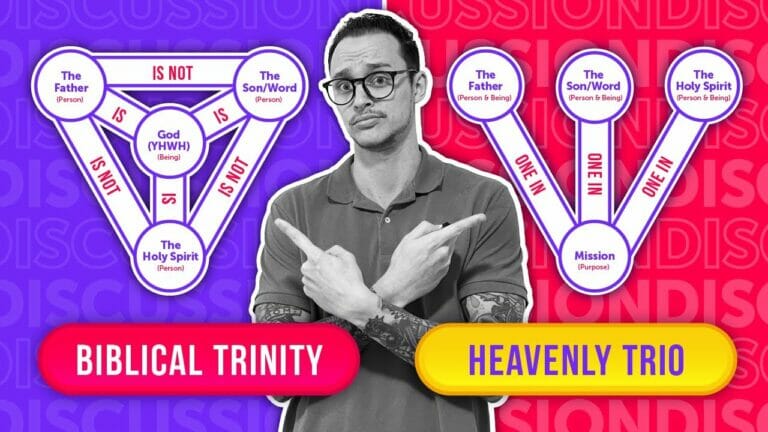
Deity of Jesus Christ. And so all the cults will reduce Jesus to the Archangel Michael as in Jehovah’s Witnesses, the spirit brother of Lucifer as you find in in Mormonism, um or he is just a good man as you find in in the Unitarian Church. Um in 7th day Adventism uh Jesus uh is one being in the trio the heavenly trio uh Jesus is is raised to equality with God. So the implication there is that Jesus was not eternally uh co-substantial co-essential with the father in his nature but that he he he gained that at some point. And so as you know uh Miles
The early pioneers of the of the 7th Adventist church were Aryans. they denied the eternal uh deity of the Lord Jesus Christ. Uh rather believing that he was the first creature uh or or even those who claim that we we don’t know when he he came into existence. He he he was elevated to equality with God. So that is not that is not historic Christianity. That’s not trinitarian theology. So all the cults have these trademarks. So the definition that CRI gives is is is okay, but it’s it it’s not full enough. It’s it’s it’s it’s it’s very minimal in its definition. So
I think we need to cover all these areas to understand what we mean by a cult. So once again, a cult is a group that maintains fidelity with the historic Christian faith while at the same time denying all the fundamental doctrines of the Christian faith. Yeah, that’s good. Um there’s a lot that I could obviously rabbit trail off there on. I could spitball with you uh all day on stuff like this. I love talking about stuff like this. Um, but one thing I’ll tack on to that, all the points that you added, I think are great clarifiers. And I think when we talk about stuff like
This, I think it’s good to be exhaustive instead of loose, right? Because it leaves room for these sorts of like vague interpretations and understandings that kind of caricature what’s being said. Another one that I would add to that is all these groups always have uh, and maybe you alluded to this to some degree, but they all have a special message that only they have that God gave them through this specific individual. And that’s kind of tied to this remnant idea in Adventism or any the you know what whatever term you want to use for any of the other groups. This
Idea of we’re special. We have this special thing that God’s only given to us and your spiritual wellbe well-being depends on coming in and accepting that and joining us. Um but everything you said there is good and it’s a perfect segue into what well actually there’s one more thing on that that I want to say. Um just because I know Adventists will hear that and say the pioneers didn’t believe Jesus was created. Um they explicitly said he wasn’t created, right? They said he had a beginning at a certain point though and he was generated like a human being’s son is
Generated. Yeah. Um and that happened at a certain point. It was so far in the past though it’s basically eternal and you can still call him God because well he’s generated from the father who is God. Um and we got into that over on a stream on Tony’s channel. So, if you all want to check that out uh more in depth, I’ve done the funeral stream on our platform, but then we also did an amended version of that over on Tony’s channel. The link to that is in the description down below. But with that established, brother, now I want to examine some of the claims and teachings
Of Seventh Day Adventism and test and see if they hit any of the benchmarks that you just laid out. So we’ll look at a few of these and then after that we will transition to looking at what scripture has to say about countercultics. So the first one very simple quote here cited it many times. The father is all the fullness of the godhead bodily and is invisible to mortal sight. It’s in faith I live by on page 39. It’s on evangelism uh page 614. Now, the last time, Tony, that you and I talked, we discussed the Adventist Heavenly Trio and how it’s very
Different than Orthodox Credle Trinitarianism. The Heavenly Trio is three distinct beings that all have literal tangible form. To use the words of Ellen and James White, and as this statement also showcases, God the Father has a physical body, but is invisible. has a physical form but is invisible. Notice too what SDA theologian Jerry Moon writes regarding this. This is from his paper, The Quest for a Biblical Trinity. He writes, quote, “The change from Adventist rejection of the traditional doctrine of the Trinity to acceptance of a biblical trinitarian
Doctrine was not a simple reversal.” When James White denounced credle trinitarianism in 1846, Ellen White agreed with both his positive point that the father and the son are two distinct literal tangible persons and his negative point that the philosophical trinitarianism held by many did spiritualize away the personal reality of the father and the son, meaning their physicality, having a physical body. Soon after this, she added the conviction based on visions, based on visions that both Christ and the father have bodily form, rejecting the teaching of
One trinitarian creed that God is without body or parts. Close quote. So very clearly they reject Creed Trinitarianism as being unbiblical in favor of their own concept, the heavenly trio that they believe to be what’s actually biblical. We talked about that on your channel. They say this is biblical trinitarianism, not that philosophical trinitarianism of the Christian world. Does such a belief put one out of bounds with Christian orthodoxy? or is this simply heterodox that the god the father and the son and the spirit all have physical tangible
Forms? Yes, it it definitely puts you outside uh the bounds of Christian orthodoxy because it’s it’s not trinitarian theology. They use the language of trinitarian theology but they are changing the meaning of the word. And so this is very common. Uh Joseph Smith spoke of the trinity. He quoted, he used the word trinity, but then he said that the trinity constitutes three distinct personages and three gods plural very much like 7th day Adventism does with the three beings, the trio that are three beings, not three persons in one god. And so by quoting uh and and I’ve
Been noticing a lot when I’ve been looking at Ellen White, she she she seems to have a poor memory with scripture. I mean, she thinks an angel spoke to Cain and uh she thinks the dogs ate Judas’s uh uh body when it fell off the tree and and so forth. But when they quote this passage, when she says the father is all the fullness of the godhead bodily, she’s look she’s taking Colossians 2:9 out of context because Colossians 2:9 says that in him that is Christ, in him dwells the fullness of the Godhead or the fullness of deity in bodily form or bodily. And so she’s
Attributing something that that belongs to the son, namely the incarnation, and she’s attributing it to the father. Uh when Paul says no such thing, Paul makes it very clear it’s the son in whom dwells the fullness of of the godhead or deity bodily. And that’s clearly right there in Colossians 2:9. But then when she speaks about the father and the son having this body being having bodily form, this again is it’s almost as if she copied Joseph Smith because in Doctrine and Covenants section 130 verse 22, it says the father and the son have a body as tangible as man’s. And when
Joseph Smith claimed to have had the first vision in 1820, um he says that he saw God the Father and Jesus Christ and they both had bodies. And so the God or the gods that OMG White is speaking about here has a striking similarity with the God of the Mormons. And that’s not something to be proud of. And so it definitely puts you outside the bounds. Every heresy in the history of the church, Miles, as you know, always began with a corrupt view of God. And so whether it’s Sebellionism or Aryanism or Ntorianism, you will notice it always begins with a corrupt view of
God. And when you don’t acknowledge that there are three who’s and one what in God. When you confuse those categories which Adventists have done committing the categorical fallacy by confusing being in person. The moment you do that you have detached yourself from the historic church. And this is why the church was so careful to define its terms by publishing creeds against heresy so that it can become very clear this is what we mean. And so the definition that the Adventist literature is giving us about who God is is so serious that if you have the trinity
Wrong then you have the deity of Christ wrong. Uh and so a denial of the trinity is one of the first things to look out for. And this clearly puts Adventism outside 7th Adventism outside the the church of Jesus Christ. Yeah. And and I I think something that’s easy to overlook and you hit on it there, the importance of the uniqueness of the incarnation, the economic work of the sun. part of that work uniquely being having and taking on human nature. Now, the SDA church, well, we’re going to see that actually a little bit later, so I’ll I’ll leave that on a little bit of a
Cliffhanger. Um, but this understanding here of God the Father having a body, which I agree, um, it’d be an interesting study. I maybe need to do a deeper dive on on this. Um, that’s another area of parallel with Mormonism that is strikingly similar as the plan of salvation in Mormonism is to the Adventist plan of salvation coming from Ellen White’s spirit of prophecy. Um, but this understanding of God the Father having a body is due in part to what they teach being made in the image of God means. So notice again very simple statement testimonies
For the church volume. Oh, actually that is the wrong slide. There’s the right one. The great controversy page 614. We will get to first uh or sorry uh testimonies for the church volume 8 momentarily. But she writes, “In the beginning, man was created in the likeness of God, not only in character but in form and feature.” So Ellen in great controversy, which is supposedly, by the way, Tony, barricaded by a thus sayaith the Lord, according to selected messages, book 3, page 122, paragraph 2, claims that part of being made in the image of God is that
That includes form and feature. We look like these three heavenly trio persons slashbeings because they use the term or Ellen at least used the term interchangeably. What does it mean that we’re made in God’s image? And is this a teaching that puts Adventism outside of orthodoxy? Yes, it does place it outside orthodoxy. And in fact, uh, Miles, that is exactly the very same argument Mormons use. That the reason why Mormons believe God has a body and is an exalted man is because um, we are made in his image. God, the Mormon God, made humans to look like
Him. That is to have bodies like him, tangible bodies like him. And so, once again, Ellen White uh, seems to be dipping her feet in in the well of Mormonism. But yes, it does place them outside because the God of the Bible is incorporal. God does not have a body of flesh and bones other than God the son uh from the incarnation forwards. But God in terms of what we understand about God the father and God the holy spirit they do not have bodies. Uh and when we are made in the image of God, that language, the amoei, the image of God used in Genesis 1:26 to 127 is wording that the
Ancient Israelites would have been familiar with in the ancient near east when the god would make the king. The king in the ancient near east was considered a son of the god and the king was said to be made in the image of the god. And that language means that the king was to image the god by reigning or ruling in hisstead as his visroy on the earth. So that the language of imaging doesn’t mean that we are imaging God as he is that is in his essence. We’re we’re not the same as God. We’re we’re made in his likeness. We’re like God in that we sh we share certain finite
Attributes that God has graciously given us. And so that image language in Genesis is immediately followed by the words and let them have dominion over the fish of the sea, the the the birds of the air and over every creeping thing and every domesticated animal. In other words, man is to image God by ruling in hisstead on the earth as its caretaker. And man is also to be a king, a prophet, and a priest. And so Adam, who was a type of the one who was to come, Adam was made in the image of God. He was a prophet in that he spoke the word of God. He was
Appraised in that he approached God and communed with God. And he was also a king because he and his wife were given dominion. That’s regal language to subdue. That’s the language of kingship. Um but the son of but the the image of God is also son of God, right? Luke 3:38, Adam is called the son of God by direct creation. And so Adam is a a a picture of the one who is to come. And so that language is repeated with Noah and and Abraham and uh the nation of Israel collectively is the son of God. They’re they’re a kingdom of priests and they’re to they’re to be God’s uh
Witnesses in the world and so forth. And then that language is mirrored with David who is the ancestor of the Messiah. And then the Lord Jesus Christ fulfills all of this. He is the image of the invisible God. He is the true king, the true prophet, the true priest. And he is the one and only son of God. He’s not son of God by creation as Adam was. He is the one and only, the unique, the the he is clearly the the uh one who is the only begotten of the father monogenesis uh the monogenous hyos. And therefore Jesus Christ is the perfect model of what Adam was to be. He’s the
Last Adam. And therefore, the image of God is is language that refers to our status in the world as God’s representatives, what we were intended to be. And that image of God says that we are not like animals. We’re not like the the planned kingdom. We are made after the image of the creator to image him in the world, to mirror him in the world. And so, in that respect, we we are like God, but we’re not the same as God. Uh and so Ellen White uh much like Joseph Smith thought that image meant an exact copy like a carbon copy. That is not Christian theology. Uh it has never
Been Christian theology. The only ones who veered off into this were obviously the false teachers and and and the cults and so forth. Brother, you need to come back and we need to have a discussion about Christ as prophet, priest, and king. This is an area and maybe you and I can talk about this offline and and I can get you caught up to speed. This is an area that is super important regarding 7th day Adventism because in Adventism, Christ is not truly ruling and reigning yet. They’ll call him King Jesus, but they don’t understand the dual nature or
Rather the uh triadic nature technically of the Melkchisedcian priesthood. That Christ isn’t a a priest and then he’ll stop doing that at some point and then then assume the role of a king. No, it’s a it’s a dual function that’s taking place which is why he is seated and there’s there’s there’s great uh importance around all of that. So you need to come back and we need to talk about Christ as prophet, priest, and king and its implications for 7th adventist theology. But in regards to God having a physical body, it’s almost like they make a human form like a body
A communicable attribute from God. They erroneously are are ascribing the physical form of a human to something that’s like a communicable thing that God is bestowing on us, but that’s not a communicable attribute. um that that’s something that’s God is is is wholly other. And I know when Adventists hear this, they think, “So you’re saying he’s imaginary because this then gets into their physicalist worldview.” Yeah. They have a a physicalist view that really everything that is has physical form. Satan has physical form. The Holy Spirit has physical form, but is
Invisible to the mortal eye. Um the angels look like human beings that have wings. Um, that’s what Ellen described seeing the stereotypical sort of thinking of of angels. Yeah. But regarding the great controversy, which is the worldview of the SDA church, not just a fundamental belief or the book by Ellen White, notice what Ellen White says regarding the relationship of God the Father and the Son. And I’m specifically using the quote from Testimonies for the Church volume 8. You guys can go look at this, but then more specifically go to Spirit Prophecy Volume 1 starting at page 17,
Which this is essentially alluding to or speaking about. Notice what she says here, and you can go check it out obviously in Testament of the Church volume 8 as well to see that uh no, this isn’t out of context. It’s very simple and very plain though. She says, “God is the father of Christ. Christ is the son of God. to Christ has been given in exalted position. He has been made equal with the father. All the councils of God are opened to his son. Close quote. Now Tony, Adventists will tell you when you cite this that’s out of context. That’s not
What she meant. She didn’t mean that Christ was given an exalted position. She didn’t mean that he was made equal with the father. She was just saying that the because she’s commenting here essentially on or alluding back to like I said, Spirit of Prophecy Volume 1, page 17 where we looked at this on your your channel um where Christ was made equal with God the Father at a point in a pre-Earth origin story. They’ll tell you, “No, no, no. The father was just revealing something that’s always been the case.” Which means that words don’t really have any
Meaning at all. Because being given something, being invested with something, devolving, all these terms that she used to talk about this all clearly speak to Jesus being given something, something he did not previously possess. So according to the great controversy paradigm, prior to the creation of the earth, Christ was exalted to be made equal with the father. This was in the soon anticipated creation of the earth. This exaltation led to Jesus being brought into the councils of God that he previously was not involved in. And as she says elsewhere, was given authority he didn’t
Previously possess. And there’s really no separating this from SDA theology. That’s the thing. You know, lots of Adventists may tell you, well, I I I don’t recall being told this or that sort of thing, but systematically there’s no way of separating this from SDA theology. It is part of the great controversy worldview. It interprets and tells us why Jesus came, what he came to do, what the cross was about. All of that stuff is informed by the great controversy. Is a statement like this in any way, shape, or form compatible with Christian orthodoxy?
No, absolutely not because once again it it denies the co- essentiality or the co-substantiality of the son with the father which is eternal. And so to even claim that Christ was made equal to God the father is implying obviously that he was not equal at one time. Obviously there was a time when he was not equal and then he was made equal. And this violates uh scripture uh chapter and verse. So Philippians 2:6 we have the the Carmen Christi the famous hymn to Christ. And Paul says who being in the form of God thought it not robbery or did not think equality with God to be
Something to be grasped. And the word that Paul uses there is a very important word where he says who being in the form of God. He uses there the participle hon which is the present uh the the present um participle of the verb amii the the Greek word verb that means to be. And so the present participle being implies that Christ Jesus the son was always in the form of God who being in the form of God did not think of robbery to be equal with God but that he emptied himself and took on the form of a servant. So to quote the words of of the famous uh
Church father uh Gregory uh I think it was Gregory of Nanzanis who said he remained what he always was but he became what he was not. In other words he remained eternally God but he became what he was not. He took on flesh. He he took to himself human flesh in the incarnation. That’s something that he did not always have. He took that in spaceime but he never relinquished his deity. He remained God, fully God uh before the incarnation. He was fully God in the manger. Fully God, fully man. He was fully God, fully man when he nursed at the breast of his mother. He was
Fully God, fully man when he was 12 years old in the temple uh answering questions. He was fully God, fully man during his ministry. He was fully God, fully man on the cross and fully God, fully man in the resurrection. And he remains forever the theanthropos, the God man. And and we can add to that um of course John 1:1 the word eternally was he was with face to face with God and he was God. Uh through him all things were made without him was not anything made that was made. And uh Hebrews 1:3 he is the exact representation of his nature of God’s
Nature his substance. The Greek word is aposto hypostasis which is the word for nature or substance. And then of course John 5:18 when Jesus claims to be one with the father and calls God father. The Jews fully understood this. They they were angry. They wanted to kill him for not only breaking the Sabbath, but for claiming God as his father, therefore making himself equal with God. So the Jews understood that something that the Seventh Day Adventists for some reason don’t understand. The the opponents of Jesus fully understood that language of what he meant. So to deny
The equality of the son with the father, the co-eternality, the co-substantiality is once again a perversion of the trinity. The trinity is not a trinity. It’s it’s as we’ve been discussing miles, it’s it’s a trio of beings, but those beings are not co-eternal and co cosubstantial with one another. Now you mentioned Philippians 2 there. I want to look really quickly here at, excuse me, what the SDA church teaches regarding Philippians 2 because what you brought up there is so important. The hypothatic union is foundational. Absolutely. It creates a lot of problems when people
Don’t understand the hypothetic union. I I’m going to go out on a limb here and say 85 to 90% of the objections that I hear from anti-trinitarians would be completely cleared up if they understood the hypothatic union. Mhm. Their whole argument is completely null and void simply because they don’t understand the hypoasis and they’ll say, you know, that’s not biblical language when yeah it is in the Greek that’s what it’s being pulled from. Um, but I want to correct. But I want to look here at what the SDA church says regarding Philippians 2. Notice
What they say here on a page about death, the the the life, death, and resurrection of Jesus Christ. So they they write under the heading Jesus the son of God is born a human on earth. And they write, quote, “Jesus came to experience life as we do, as 100% human. Out of love for every single one of us, he chose to be stripped of his glory. Philippians 2:6-8. And was given no advantage over us when it came to living a life without sinning.” Isaiah 53:2. The Word became flesh and dwelt among us. John 1:14. But this made him no less divine. Jesus was still 100% God. John
1:1. This concept, here’s the hypothetic union that Jesus is 100% God and 100% human can be mind-boggling. But this was necessary in God’s plan to deliver us from the grip of sin while the great controversy rages on. Meaning both good and evil surround us daily, waring against one another. So Jesus as part of the Godhead had to live a perfect life. Then his innocent blood could cover our sins and make it possible for us to inherit eternal life. Philippians 2 6-8 says that even though Jesus is God, he set his divine nature aside and took on human nature.
He came to serve us to show us God’s love for us and live as our example. He came to minister to people through his perfect obedient life. He obeyed the father in every way, even when it led to a humiliating death on a cross. Close quote. So Tony, they pay lip service to the hypothatic union. But then in the very next paragraph referring to Philippians 2 6-8 for a second time, they put forth the kotic interpretation that Jesus set his divine nature aside and that while on earth he was only a man. Now, but without getting into all the pre-earth and well, he was exalted
To be made equal and then that’s what he’s setting aside and all of that aside, is that interpretation of Philippians 2 within Christian orthodoxy? Absolutely not. It’s it’s actually blasphemous. Uh first of all, uh to say that he was part of the Godhead, that that’s the old heresy of partialism, that God is the father’s apart, the son, and the holy spirit are other parts in God. that they’re a third part of God each. That that again is bad language. And and language is so so vital here. Um and the the language of this canotic there’s this heresy related to the the
Kinosis idea that the kinosis heresy is that Christ divested himself of his deity and and became a man as if somehow deity could cease to be which is a logic a logical impossibility. God cannot cease to be God. And and so they distort the incarnation there because while they’re saying Jesus is 100% God, 100% man, they go on to say that that he takes on this human nature and he simply lives as a human being. And that is that’s the exact opposite of Paul of what Paul is actually saying in Philippians 2. He’s telling us that in emptying himself. Remember the backdrop
To this Miles. And it’s very interesting that we’re in the we’re in the the uh the Easter weekend with with Monday, Thursday, and then Good Friday tomorrow and then resurrection Sunday. Um it’s interesting that that language of he he emptied himself. He poured himself out. The language comes from Isaiah 53 where it talks about the servant of Yahweh, the servant of the Lord. It says he poured out his life unto death. And so the language of of pouring out there is not divesting himself of his deity. It it has to do with his becoming the form of a servant where he pours himself out
As a guilt offering. He pours his life out uh as his human life as a as a as a perfect guilt offering for us. And so Philippians 2 says nothing of the sort that Jesus somehow ceased to be divine and and he took on a human form. And I guess we’ll get to this as well, but Ellen G. White believed that when Jesus died, he was dead. He was dead as as as as a nail. And and God the Son as we know it ceased to exist uh at least for 3 days. Um so their view of the incarnation here is is is clearly um unbiblical. I mean, I would fail my seminary students if they gave me that
Explanation to execute Philippians 2 with. Um, so this idea of emptying himself out has nothing to do with his deity. Uh, it has to do with his humiliation in the incarnation. He humbled himself. It says he he found himself as a man. It says he humbled himself even unto death on the cross. The idea there, Miles, is that in Philippians 2, it’s think of it as as a Vshape. Think of it as the letter V. So he’s in the form of God, eternal God, and he goes to the bottom. He just doesn’t go to the bottom. He goes to the bottom of the barrel. He dies the death,
The most heinous form of death, death on a cross, the most humiliating form of death. So he really went down to the bottom of the barrel in the incarnation. But because of his perfect obedience to the father, the father highly exalts him. So now he the god man comes back to the place from whence he came. that is he he he ascends and is exalted to that place and he has the name it’s not Jesus everyone thinks the name above all names is Jesus it’s actually the name Lord the curios which is the Greek equivalent of the Hebrew Yahweh and so the idea is he
Goes from glory goes down into humiliation in the incarnation without ceasing to be fully God and fully man and then because of his obedience he is the the Greek literally says says he is hyperexalted to the very heights to the very top and that and that at his name the name that he has the name Yahweh that he possesses the backdrop backdrop to that is Isaiah 45:23 where Yahweh says to me every knee shall bow to me every tongue shall confess Paul applies that Yahweh passage to Christ and says that’s Jesus that’s why he says every knee is going to bow to him and every
Tongue is going to confess that Jesus Christ is Lord the curios Yahweh to the glory of God the father. So, so this beautiful passage which was sung by Christians, it was believed to have been pre-Pauline before Paul uh that it would it would have been sung in in in the Aramaic speaking Jerusalem church. They speak of Jesus Christ as fully God, fully man and then being highly exalted because of his perfect work and his perfect uh redemptive work that that he performed for us. not some, you know, phase one and, you know, to be continued until we get to 1844 where he enters
Into the the investigative judgment and all that silliness, uh, all that, uh, uh, poppycock, as the English say, that Ellen White came up with. What you stated there regarding Philippians 2 is exactly what Augustine Augustine says in his Philippians 2 commentary where he explain well he explains exactly what you said and I like something that he says there because I think it gives people a great analogy or example if you will um to really understand what’s going on there. He says Christ added unto himself human nature, not like a person puts on a
Costume. It wasn’t just like an external thing that was on him and he’s like inside it like you are a costume. He added unto himself true humanity. He was 100% man. And the whole context of what’s going on there is how Paul is pointing to Christ in his humiliation to use technical terminology to say that is an example how you should be humble in serving others. He exhorts us to be like Christ was. This idea that what’s being said there is Christ set his divinity aside and Paul is pointing to that to say so you do likewise. It breaks down contextually. um the
Kinotic interpretation is just not a good interpretation. But now regarding the Holy Spirit, Jerry Moon again, SDA scholar writes this same paper, the next page in the 1890s. 1890s, folks, 1890s, that’s after 1863, the incorporation of the SDA church. They love to distance themselves from 44 to 63. 1890s when she became convinced of the individuality and personhood of the Holy Spirit. She referred to the Holy Spirit in literal and tangible terms much like those she had used in 1850 to describe the father and the son which we just looked at. For instance, addressing the church at
Aenddale College in Australia in 1899, she declared, “The Holy Spirit who who is as much a person as God is a person is walking through these grounds unseen by human eyes. He hears every word we utter and knows every thought of the mind. Close quote. So the Holy Spirit also looks like we do in forms in in form and features, has a physical body, but like God the Father is invisible to the human eyes. Tony, I got to tell you, when I hear them say stuff like this and talk about how what Christians believe is this God who’s so impersonal and and fake and phony and
Imaginary, but then they’ll tell us that God the Father and God the Holy Spirit in their terminology have physical tangible forms but are invisible. How is that then any different than us saying God doesn’t have a physical body. And also not just that, but physical matter is not invisible by definition. It’s physical. But like God the Father, the Holy Spirit is invisible to human eyes. He apparently has legs like a Bigfoot sighting. Ellen White claimed he was vis invisibly walking around Aenddale College in the 1890s. But then it gets even messier.
Because Ellen also had this to say in what Jerry Moon in that same paper says is supposed to be the final conception of Ellen White’s understanding of who God is. Desire of Ages, page 669. The Holy Spirit is Christ’s representative, but divested of the personality of humanity and independent thereof. Cumbered with humanity, Christ could not be in every place personally. Therefore, it was for their interest that he should go to the Father and send the Spirit to be his successor on earth. No one could then have any advantage because of his location or his personal
Contact with Christ. By the spirit, the Savior would be accessible to all. In this sense, he would be nearer to them than if he had not ascended on high. Close quote. Ah so at the same time the Holy Spirit is Christ’s representative but divested of personality and humanity independent thereof. She says because Christ when the Adventist Jesus incarnated they claim he lost the attribute of omnipresence. So he’s not phys he’s not omnipresent because again you have to think about this in terms of physicalism. Well, when he added unto himself, he had
A body before incarnating, but then took a different body, I guess, in the incarnation, he lost the attribute of omnipresence because his physical body limited him. I used to hear discussions about this in Adventism about how well Christ, he loved us so much, he was literally willing to give up some of the things forever that were bestowed on him in his exaltation. And this is precisely what is taught in their fundamental beliefs book as well as their Bible commentary. So before SDAs want to say, “Oh, that’s just Ellen White,” notice this is in the fundamental beliefs book,
The exposition from the church of their own beliefs, page 50 about God the Son. Quote, “Jesus asserted his omnipresence with the asurances, lo, I am with you always, even to the end of the age.” Matthew 28:20. And where two or three are gathered in my name, together in my name, I am there in the midst of them. Matthew 18:20. Although his divinity has the natural ability of omnipresence. The incarnate Christ has voluntarily limited himself in this respect. He has chosen to be omnipresent through the ministry of the Holy Spirit. John 14:16-18. Close quote.
So Tony, is this within Christian Orthodoxy or is this a different Christ and a different spirit that Paul warns us about in 2 Corinthians 11? Yeah, different different Holy Spirit, different Christ. Uh 2 Corinthians 11 3-4. And the ones that are teaching this uh in verses 13 to 15, for such apostles are deceitful workmen masquerading themselves as apostles of Christ when in fact they’re not. And no surprise for Satan himself disguises himself as an angel of light. So it’s no surprise if his servants or ministers do the same. So here’s here’s the the problem. They
Don’t understand the incarnation. They don’t understand the hypothatic union. They don’t understand the I’m going to use that big term communicatio idiomatum the communication of the attributes uh which is a mouthful but it’s a very important statement about the hypothatic union that the son what is what is said of his divine nature is said of the son the person of the son what can be said of his human nature is also said of the son because he is one person with two natures and to say that Christ uh became limited in his incarnation is once again
Um is once again to to pervert what Philippians 2 6-11 says. It’s to pervert what John 1 uh 1:1 and 1:10, he was in the world and even though the world was made through him, the world knew him not and then the word became flesh. Um, and it’s quite interesting, isn’t it, that in in Matthew, the the passages they quote, Matthew 18:20, Matthew 28:20, it is the incarnate Christ, especially 28:20, it is the risen Christ, the God man, the risen Christ, who says he’s going to be with his church until the end end of time as the God man. And and he even said it during his ministry,
Where two or three are gathered in my name, there I am. He he he is clearly saying, I am going to be there, the son. I the son am going to be there. Um so the insinuation there is that in the incarnation the incarnation did something to him. It it it it limited his deity which again is a contradiction in terms the the doctrine of the assay of God that God that the means what God is of his in his own nature. Um it is impossible for God to cease to be God. It’s impossible for God to relinquish any of his incommunicable attributes. One of them being omnipresence. Uh and
So it it seems to me that that the 7th Day Adventists don’t understand the words they’re using. They’ll say things like incarnation, but but they don’t adequately describe it in biblical terms. Um and they don’t describe the relationship of the son in terms of of his divine attributes that he shares equally with the father and the holy spirit. There’s no there is no divesting of attributes in god. The ontological trinity is eternally omnipresent, omniscient, uh omnipotent and so forth. So we’re we’re dealing here with another Jesus. And that’s how Satan works, isn’t
It, Miles? He always makes the counterfeit look like the real thing. It almost looks like the real thing, but it’s not. And so here we see once again where Adventism is is is is on that cusp of orthodoxy, but then but then they they degrade the Lord Jesus Christ by by by limiting him in his incarnation and divesting him of his true eternal glory as the God man. This is why, brother, I I I’m going to say this, and I know it’s going to upset a lot of SDAs, but this is why this cult is so dangerous. Yes, it’s closer to the truth than some of these other groups. Parsing
Through all this is a nightmare. If you didn’t have a great controversy worldview, it is very hard to navigate Adventism. They are very good at saying things and making things sound a certain way where depending on the context they give themselves plausible deniability. They give themselves some sort of wiggle room to say well see and kind of bloate to obuscate away from what’s really being said because there’s enough of of like inside baseball if you will to really know what’s what’s being said. Now my next question, it’s a subject I think many don’t think about the
Importance of. It’s not something that’s often thought of regarding heresy. Something that’s oh wow that’s that’s a dividing line and that’s resurrection with regards to the resurrection and the death of Christ which is central to the gospel. You mentioned this earlier. Notice what Ellen White says about the Adventist Jesus in death. This is from the spirit of prophecy volume 3. Quote, “When he closed his eyes in death upon the cross, the soul of Christ did not go at once to heaven as many believe. Or how could his words be true? I am not yet ascended to my father.”
The spirit of Jesus slept in the tomb with his body and did not wing its way to heaven there to remain or or there to maintain a separate existence and to look down upon the morning disciples imbalming the body from which it had taken flight. All that comprised the life and intelligence of Jesus remained with his body in the seeler. And when he came forth, it was as a whole being and did not have to sum uh uh and he did not have to summon his spirit from heaven. He had power to lay down his life and to take it up again. Close quote. So because of the SDA church’s errant
Teaching regarding the nature of man, their anthropology that man does not have an immaterial aspect to his nature but is strictly a physical being. Anthropological monism. The adventist Jesus was also that same way. So now we see how the incarnation impacts other areas of theology. Ultimately, when he died, the Adventist Jesus ceased to exist for 3 days. It was no different than what they believe about when any other human dies. Your breath leaves your body and goes back to God. Your body goes into the ground and your conscious experience ceases.
She actually contradicts herself here by the way because elsewhere she claimed that only the father could resurrect Jesus. But nevertheless, Tony, is this within christo uh christoologgical orthodoxy? If not, why not? Definitely not within orthodoxy. That that’d be like talking about a Jewish fortune cookie. Uh there’s definitely no relation whatsoever to orthodoxy there. What she says there if if people really pay attention is she’s basically saying God the son cease to exist. So the great I am the one who who has a say who exists of himself the one who’s the
Source of all existence the one who holds the the universe by the word of his power the one who holds all things together he cease to exist. God cease to exist. That is a logical contradiction. That is a logical contradiction. the infinite, the eternal, the very source of life itself ceases to exist. When when Habac says, “Oh my God, oh Lord, my God, you shall not die.” Um, God cannot die. And so when you think about it, the second person of the Trinity ceased to exist. What a what an alarming statement to make. At least the Jehovah’s Witnesses say he was just a
Man. He he was not God in the flesh. But Adventists say he was God in the flesh, but yet God the son ceased to exist. Um what Ellen White of course forgot to mention was that when Jesus drew his last breath, he said, “Into thy hands I commit my spirit.” So he gave his spirit to the father at death. He also said in John 2:18-22, “Destroy this temple and in 3 days I the son will raise it up again.” And John says he was speaking about the temple of his body. So when the disciples saw him after the resurrection, they remembered that saying. So the Lord Jesus Christ
Not only predicted his death and he described his body as a temple. He even gave us the time frame that he would r he would raise it again in three days. So who raised the body of Jesus Christ? It was the trinity. But it was also the son himself. He says you destroy this temple and in three days I will raise it up. And so to assume this idea that the son of God was was gone, that he ceased to exist. Uh and then she says he has the authority to lay down his life and take it up. Well, how could he take it up if he was non-existent? And so those statements are just riddled with logical
Inconsistencies there. They truly are incoherent when you really think about it. And they fly in the face of clear scriptural teaching. Totally. Um and and like I said, I think this is an area that a lot of people don’t stop to think about the implications of. This is a ripple effect of your view of the nature of man is important. Your understanding of what man is, what reality is, etc. touches on other areas of your theology. This is an area, Tony, as well. And and if you start to encounter more Seventh Adventists, you’re going to start to understand this. This is a big area of
Interest for SDAs. A lot of people remain Seventh Day Adventist for the Sabbath, but also thinking that the Sabbath vindicates Adventism, which it doesn’t. Um, but another area, if it’s not the Sabbath or potentially both, is the nature and state of the dead, the nature of man and the state of the dead. They get attracted to Adventism because of this area. But as we just saw the implications that that has for Jesus’s humanity, you used a big word. I’ve I’ve mentioned it a number of times on the platform. The communication of the attributes communicato idiomatum.
This is why this stuff is so important, folks. It it’s not just big terms for the sake of big terms or um you know sounding sophisticated. No, it says specific things. These things are important. These things matter as it pertains to the resurrection. Notice what the SDA church’s Bible commentary says, and it’s courtesy of Ellen White because it’s from her book, Heaven, on page 40. This is what she says. It’s from the uh if you want to see it in the SDA Bible commentary, it’s volume 6, page, 192 and three. Speaking about the resurrection, she says, quote,
“Our personal identity is preserved in the resurrection.” Remember what they mean by person. Though not the same particles of matter or material substance as went into the grave. The wondrous works of God are a mystery to man. The spirit, the character of man is returned to God. They are to be preserved. In the resurrection, every man will have his own character. God in his own time will call forth from the dead or call forth the dead, sorry, giving again the breath of life and bidding the dry bones live. The same form will come forth, but it will be free from disease and every
Defect. It lives again bearing the same individuality of features so that friend will recognize friend. There is no law of God in nature which shows that God gives back the same identical particles of matter which composed the body before death. God shall give the righteous dead a body that will please him. close quote. So by the word resurrection, they don’t mean the self-same body that went into the ground, but a different body of different particles that will be brought together that identically mirror your features and form such that you will be
Recognizable. It’s more akin to cloning, not resurrection. Many Christians, Tony, may not have given much thought to the grave importance of this. Paul says in 1 Corinthians 15, after laying out what the gospel is, that Christ is the example for the believer. And in 15:42, 1 Corinthians 15:42, it is very clear what is sown is raised. a new body of new particles was not sewn to then be raised. So my question piggybacking off of of what Paul says there kind of giving the or showing the hand is what was put forth here in or orthodox belief regarding resurrection?
Absolutely not. Absolutely not. You know the the the nine creed goes so far as to say I believe in the resurrection of the flesh. the flesh. What goes in, as you rightly pointed out, is what’s going to be raised. And notice that the Lord Jesus Christ, if you want to know what a resurrected body looks like, you have to look at the one who had who is the first fruits from among the dead. If you look at the Lord Jesus Christ, who is the prototype of what we shall be in the resurrection, what did he have? Well, the body that was placed in the tomb came out. It was a glorified body in the
Resurrection. It was an immortal body in the resurrection. But it was the same body. That’s why the tomb was empty. The body that was laid was brought was raised and he came out. And what did that body look like? It bore the marks of the nails in his hands. It bore the spear wound on his side. That that wasn’t a new body with new particles. That was the body that was hung on the cross. That was the body that was laid in the tomb on that late Friday afternoon. And so Christ’s resurrection body is the prototype of ours. And in 1 Corinthians 15, Paul’s dealing with these Greeks who
Who deny bodily resurrection. And Paul is so literal and physical. He says that that this this that is the body. It the mortal shall put on immortality. The the corruptible shall put on the incorruptible. Well, what’s corruptible? Well, the corruptible is what’s sown in the earth. It is sown in a corruptible body. It remember the word it is referring back to the same body. It is raised incorruptible and it is sown as a um mortal body but it’s raised in immortality. So that is why the phariseaic beliefs the Pharisees were so literal on this Miles that in
The pseudographical or apocryphal book second Baro it actually said that that the reason why the the dead were were were were were buried with their same clothes and and significant feature marks is so that in the resurrection they could be recognized by by their families. And and so the idea of resurrection in the Bible and and even in the history of the church has always been that the body that is laid in the ground just like the seed is put into the ground from that seed is going to come something glorious. So just like the plant is more glorious than the the
Husk of the seed that is placed in the earth the resurrection body is not disconnected. I mean, when you plant a seed, for example, you plant a, let’s just say you plant a tulip, um, you put that seed into the ground and the tulip will grow out and obviously give us these beautiful different colored flowers, uh, that the tulip brings. But the tulip is not disconnected from the seed or the bulb. It is organically connected, but it is a superior continuation of that which has been laid into the ground. And so that is why the resurrection body is called glorious. Um
It’s it’s it’s a body that Christ shall conform to be like unto his glorious body. And 1 John 3:2 says that when he what we shall be like, we don’t know. Uh what will what will we be like in the resurrection? Well, one thing we do know is that when he appears, we shall be like him. For we shall see him as he is. Well, how shall we be like him? Well, we will be like him because he will change our bodies to be conformed to his glorious body. Uh and therefore it is the same body that is placed into the ground. That’s why the Jews took the bones of the dead after the body had
Rotted. They put the bones into oaries because the belief was from these very bones God is going to raise the dead. and and that is why uh the bones were sacred to the Jews uh because they were a guarantee if you will those remains would be resurrected. Yeah. And like I said, this is an area I don’t think enough people are necessarily thinking about to examine when it comes to heresies. And I noticed the framers of the Westminster confession, for example, um and this may actually be in the the the Second London Baptist Confession. Um, I would need to
Check and just and just update, but I know for sure there um it would not surprise me if the Augsburg confession had something similar, but it specifically states that Christ resurrected in the selfsame body. And now the argument that I’ve heard from a number of Seventh Day Adventists, which it falls flat because it doesn’t change the fact that Paul uses the Lord Jesus Christ as the example for the believer. Um they claim, well, he was unique because he never sinned. Ellen White there said that um it will be a body that has no defects and your current body has defects. So if
God were to resurrect that same body, well, it would have a bunch of defects. And this gets into their their misunderstanding of glorification and what the the the doctrine of what glorification actually is. Because of their sinless perfectionism um and the wrong definition of sin and the nature of man, they don’t really understand what glorification actually is. But that’s a number of areas, folks, where 7th Adventist theology departs from Christian orthodoxy on foundational areas, apostles creed level stuff. I mean the resurrection itself is included
In the apostles creed regarding Jesus Christ resurrecting um 1 Corinthians 15 the the most like stereotypical foundational summation statement of the gospel regarding the resurrection of Jesus Christ. With that in mind Tony 7th Adventism is a cult. It is a cult according to the definition that you laid out previously. Now, I want to transition to the biblical case for countercultics. With that in mind, why is countercult apologetics important? What is the purpose of it? And why is it necessary according to the Bible? Are we just dogging on people?
Are we just picking on people? Are we trying to be uh gatekeepers, if you will? What’s the goal of all of this? Well, let let me before I jump into that, let me just say that uh talking about the resurrection, Ignatius, the bishop of Antioch. It was one of the apostolic fathers very early. Uh his writings are like 108 AD. He was said to be a disciple of John. He himself says that Jesus Christ rose again from the dead. And he says in the same body, he actually says that as well. And if he got that from John the Apostle, then then we have this at least we have some
Form of a a transmission of of of material there traditional. So to get to your question about countercult uh evangelism, I think it’s very clear from the New Testament that that we are called to uh as Jude says, Jude verse three, that that we are to contend earnestly for the faith that was once for all delivered to the saints. Notice that language, Miles, once for all delivered, which means it doesn’t have to be restored. We don’t need an Ellen White to restore it. We don’t need a Joseph Smith to restore it. It has been once for all delivered to the saints.
The saints in the first century received the deposit of faith and the church has been the guardian of that faith. Right? In in Ephesians 3, Paul Paul says that um that um that God will be glorified in the church uh uh for all ages, for all ages to come. And and that can only be true if the church has remained intact. If she had gone apostate and how would God be glorified in the church through all ages? Um so why are we to do that? Well, Jude is writing this little letter to the church, and the the theme of Jude is false teachers. There’s false
Teachers. He calls them dark clouds. He calls them clouds without rain. They are um they are u uh filthy. They uh are spots in your love feasts and so forth. And but he says that we are to contend for that faith once we’re all delivered to the saints. The implication being they’re to defend that faith against those false teachers that are uh disturbing them in the church. And then in the letters of John, he’s clearly dealing with a protonostic group that denies the incarnation, that denies Jesus has come in the flesh, uh that denies Jesus is one with the father,
That denies that he is the Christ. And so John is dealing with people who are denying that they’re sinners. If anyone says he has no sin, he’s a liar. the Gnostics made these claims that we were truly pure spirits, that we really are not sinners and and all of this type of language that we find. And we see Paul taking on uh Ilimus the sorcerer in Acts 13. Uh we see Peter confronting Simon Maggus in in Acts 8. Um and so we know that the early fathers of the church, a number of them were apologists. Uh people like Justin Martyr, he would give right apologies that his defenses. uh
There’s Athena as well. So some of these early fathers of the church were known for for being involved in the ministry of apologetics. So countercult evangelism is part of the great commission. We do have a responsibility to the Jehovah’s Witnesses. I mean think of it, Miles. You don’t even have to go to them. They’re coming to you. They’re coming to your doorstep. The Mormons are coming to you uh to your doorstep. And by shutting the door or or ignoring them, we’re just turning our backs on on souls that need to hear the gospel. And so I think Christians need to know this.
They need to know what 7th Day Adventism is about because when you meet them, you have an obligation to give them the gospel. And if you don’t, Ezekiel 3:18 is very clear. If I say to the wicked, you shall die. And you do not warn them of their of their of their sin or if you do not warn them of their ways, the Lord says, I’m going to hold their blood at your hands. And so we are our brother’s keeper. Cain says, “I’m not my Who am I? My brother’s keeper.” Yeah, you are. And so it’s high time that Christians get off their pews and they start engaging
These people because they are part of the great commission. And I’ve seen by God’s grace, brother, I’ve seen God save people from every strat of the cults. I mean, I could not hardy amen that any louder, any more uh uh assertive. We’ve seen hundreds answering Adventism is barely a year old. We’ve seen hundreds of Seventh Adventists come to know the true Christise and his gospel. Amen. When people tell me that this work isn’t necessary, that it’s contrary to the Bible, uh it goes against Jesus’s teaching, which we’re going to look at here momentarily. Um I I I care about
The facts. not what people think, not what people’s emotions say or their own personal opinion. I care about the facts. And I’m assertive here, as you can probably, if you’ve seen the streams on this platform, there are certain contexts in which I I’m very forthright because that needs to happen in Seventh Adventism. I think a lot of times the critics of this platform forget that I was a Seventh Adventist. I I’m not just an outsider that started criticizing Adventism. I had a great controversy worldview. It was my life. It was what I knew as reality.
That’s how you know you’re truly a Seventh Day Adventist. If you have the great controversy worldview, all of this stuff that we’ve gone over tonight comes with having a great controversy worldview. And so people can say what they want, but this is a necessary thing. No, it’s not the most PC uh area and lane. It’s not the easiest lane. You have to say things that are hard to people. You have to tell people the truth regardless of the cost, letting the chips fall where they may, if you will. Now, there’s a fine line between being a jerk and being firm and and context
Matters, but what we just went over evidences why we need countercultics because these are damnable heresies. Mhm. These are not, well, you think there should be drums in the worship service. No, this is serious heresy. When we talk about a cult, we’re talking about things that put you outside of the Christian faith. And that’s why answering Adventism exists. It’s because Adventism is outside of that. It’s not Christian. And when we get a lot of comments from Adventists that have to do with, “Why are you picking on one denomination amongst all the denominations?” That’s
The problem. That’s why this exists. It’s to warn you. It’s not amongst all the other denominations. It’s not one of those. It’s not Christian. That’s why we’re here to warn you. We’re here to educate the Christian church, the body, but we’re here to warn you. It’s a deception. You’re probably a nice person. We don’t think you’re an evil person by being an Adventist. But we care about you. I care about Seventh Day Adventists. That’s why we’re doing this. That’s why countercult apologetics work exists. It’s not to pick on people. It’s not to call people out. It’s because we
Care about you. You’re probably a genuine person. You’ve been taken prey by something that’s a counterfeit. It’s a counterfeit. Well, now with that established, I want to look at there’s a bit of a leadup to this next question, so bear with me. But I want to make sure we set set the stage fully, especially for Seventh Day Adventists. Many Adventists take offense to this ministry, which is to be expected. Like I said, it’s confrontational. We take a bold approach here. One of the most common things that we hear is some form or fashion of the claim that highlighting that false cult
Groups are out there and you need to avoid them goes directly against Jesus’s own teachings. This mentality permeates Adventism. Notice what Ellen White says in her Christ object lessons. For those that do not know, Tony, you included, this is viewed as inspired commentary on the biblical text within Adventism. It is taught from Adventist pulpits and is very regularly used within the Sabbath school quarterly, specifically Christ object lessons, because it has to do with Ellen White commenting on scripture. It’s not just a manuscript. This is in a different category in the
Adventist mind. This is what she writes regarding Matthew 13 and the parable of the swer. Christ’s servants are grieved as they see true and false believers mingled in the church. They long to do something to cleanse the church. Like the servants of the householder, they are ready to uproot the tears. But Christ says to them, “Nay, lest while ye gather up the tears, ye root up some also the wheat with them. Let both grow together until the harvest.” Christ has plainly taught that those who persist in open sin must be separated from the church. But he has not
Committed to us the work of judging character and motive. He knows our nature too well to entrust this work to us. Should we try to uproot from the church those whom we suppose to be spurious Christians, we should be sure to make mistakes. Often we regard as hopeless subjects the very ones whom Christ is drawing to himself. When uh were we to deal with these souls according to our imperfect judgment, it would perhaps extinguish their last hope. Many who think themselves Christians will at last be found wanting. Many will be in heaven who their neighbors supposed would never enter
There. Man judges from appearance, but God judges the heart. the tears and the wheat are to grow together until the harvest and the harvest is the end of probationary time. Close quote. So she primarily has the SDA church in focus here. That within their ranks there are those who are not genuine, but it isn’t the duty of individual SDAs to go around trying to determine that. that will be determined by the Adventist Jesus at the end of probation. But many SDAs Tony adopt this mentality regarding countercult ministry such as answering Adventism. And they’ll say
Christ is saying to not call out organizations or people you believe to be heretics because you don’t have perfect judgment and need to simply let what grows grow and Jesus will sort it out in the end. You shouldn’t call out Mormonism, Adventism, Jehovah’s Witnesses, etc. But Ellen White continued by saying this quote, “Notwithstanding Christ’s warning, men have sought to uproot the terrors. To punish those who were supposed to be evildoers, the church has had recourse to the civil power. Those who differed from the established doctrines have been
Imprisoned, put to torture and to death at the instigation of men who claim to be acting under the sanction of Christ. But it is the spirit of Satan, not the spirit of Christ, that inspires such acts. This is Satan’s own method of bringing the world under his dominion. God has been misrepresented through the church by this way of dealing with those supposed to be heretics. Close quote. That’s Christ object lessons, page 74. So that’s you and I and anyone else engaged in in countercultics. Essentially, this work is seen as seeking to uproot the tears. And it’s
The spirit of Satan that’s behind this, not Christ. We also see an underlying thinking that is uh those that engage in calling out heresy. Um those are the ones that are supposedly laying the foundation for religious persecution of those who go against established doctrines, which is um a major Adventist fear. But Tony, my question for you, does the parable of the swer prove that Jesus is against countercult ministry? Yeah. The first thing I would do is I would fail Ellen G. White in my ex Jesus class because um Matthew 13 uh which talks about the parable of the wheat and
The tears and and Mark mentions it as well. The context is very clear. These are these are parables of the kingdom of God. And the parable of the wheat and the tears, all it’s teaching us is that within the establishment or the local body of Christ, of course, there’s going to be wheat and tears. There’s going to be genuine believers in the local visible church, you’ll find genuine believers, and you’ll also find professing believers. Uh those who are not truly regenerate. Judas the Scariot is a perfect example. He was among the the apostles of Christ, but but he was
Not one of them. He he he was not clean, as Jesus says. uh he was a a diabolos, a devil. And so the parables of the kingdom are teaching us truths about the kingdom of God and how they will uh progress through time and and and how they will come to this this this climax of the coming of Christ, which is the harvest time. But that has nothing to do with calling out false teaching. There’s there’s there’s scores of scripture passages where Paul says in Romans 16, “Mark those who cause divisions.” Um he mentions Alex uh Phileitus and and uh Phileitus and Himaeus who have er
Concerning the faith uh have nothing to do with them. Um Jesus calls out false prophets in Matthew 7:15. Beware of false prophets who come unto you uh dressed like sheep but inwardly they’re they’re they’re wolves. And he talks about how they will claim to perform miracles and they will claim to come in his name and so forth. Why would Jesus tell us to beware of false prophets? And then he tells us that you will know a tree by its fruit unless he’s calling on us to use spiritual discernment to beware and to watch out. There are those who are going to come in his name and
They’re going to deceive many. Um Galatians 1, there are those who preach another gospel and that other gospel is anathema. Um and and on and on and on. Scripture tells us to to watch out, beware. Um watch out for the false teachers. Uh uh watch out for this person. Uh, watch out for, for example, um, uh, 1 Corinthians 5, Paul talks about expelling a a person in the church for having an illicit sexual relationship with with his stepmother. Um, that sounds pretty judgmentive where the church comes together and and and the the elders uh come to a decision to remove someone
Who’s unrepentant in the church. There’s scores of passages where we are called to be discerning. Um, uh, uh, Isaiah 8:20 uh, to the law and to the testimony. If they speak not according to these, it’s because there’s no light in them. So God is clearly telling us to use his word as a standard to to judge what is evil. And how are we to mark those who cause divisions in the church like Seventh Day Adventists and Mormons and so forth? Uh how can we call them out if if if we don’t have a standard by which to call them out, which is God’s word? And so Jesus says, “Beware beware
Of the yeast of the Pharisees. um uh do uh do as they say but do not do they as they do. So clearly the Lord tells his disciples to beware. He he predicts the coming of false prophets and false messiahs. Um the apostles warn us against this. The book of Revelation uh talks about antichrist in in in in descriptions of of a beast and so forth. And and Christians are called to be discerning um in all of these areas. And so Alan White seems to give a very myopic interpretation of the parable of the wheat and the tears. And that’s not even its that’s not even its intent. The
Intent is not to stop Christians from calling out false teachers, which by the way, Miles, 7th Day Adventists are very good at in disparaging Protestants as daughters of the of Babylon and of course disparaging the Roman Catholic as as the guilty party that changed the Sabbath to Sunday under Constantine. uh when there was no Roman Catholic Church at that time as we know. So the the the Adventists do the very things that LG White says you shouldn’t do in calling out error. 7th Day Adventists do this all the time uh in their in their conferences and and
In their videos and so forth. Yeah. The problematic presupposition of Adventists that say this is that they assume Adventism is a part of the Christian church. Yeah. Countercult apologetics isn’t about going around plucking up what you believe to be tears. It’s about pointing out wolves. Yeah. That have crept in and are seeking to sew tears under the guise of being sers of wheat. false sers of seed. It It’s not going around trying to say, “Well, it playing elect detector in to to use more formal terms.” Um, no, it’s about warning that this is a sewer of
Noxious weed, not wheat. What’s also funny about this, like you mentioned, is Ellen White is notorious for this exact thing. Preaching damnation on everyone who disagreed with their little small band of people. Everyone that rejected the fanaticism and false date setting of 1844 was labeled as apostates that God had rejected. This is the first vision, the path vision from supposedly December 1844. She saw that everyone that wasn’t on the path the the the go the world that God the dark world that God had rejected. Those who were on the path to salvation
Were high up out of the dark world. She was at the family altar and the Holy Spirit came upon her and she was taken high high up and she was shown where are the people at. And the angel that God sent her told her look up. Oh, and she looked up and there was a path way above the dark world where there was light shining. And it was the Advent people, the Millerites. They were on this path to the heavenly kingdom. Everyone that rejected the fanaticism was down in the dark world that God had rejected. And the Millerites that said, “I don’t know about 1844 anymore. I’m
Going to go back to being a Baptist or a Presbyterian.” They fell off the path. They turned away from the light that God was giving and their path became dark and muddled and they fell off the path into the wicked world that God had rejected. Jesus was angry with them. she says not in that vision but in in her other writings their prayers are an abomination and so on. So it’s silly almost to to try and and say that well the parable of the sewer is essentially saying don’t go around trying to say this person’s a false teacher. I know contextually she’s going
To be talking about within the SDA church but they consider themselves to be a part of the Christian church. And like I said, I hear all sorts of Adventists that appeal to this to say you’re going against the teachings of Jesus because again, this is her commentary on scripture. And so if that’s what Jesus is saying in the parable, well, if you go around saying, well, these are false, you know, this is a false movement, you’re going around trying to pluck up tears and could potentially be plucking up wheat. But I want to look at Galatians 5 1-12
And Paul’s response and words for the churches in Galatia. And then I’m going to have a question for you. I want to read the whole thing here. Paul says, “For freedom Christ has set us free. Stand firm, therefore, and do not submit again to a yoke of slavery.” Look, I Paul say to you that if you accept circumcision, Christ will be of no advantage to you. I testify again to every man who accepts circumcision that he’s obligated to keep the whole law. You are severed from Christ. You who would be justified by the law, you have fallen away from grace.
For through the Spirit by faith, we ourselves eagerly wait for the hope of righteousness. For in Christ Jesus, neither circumcision nor uncircumcision counts for anything, but only faith working through love. You were running well. Who hindered you from obeying the truth? This persuasion is not from him who calls you. A little leaven leavenvens the whole lump. I have confidence in the Lord that you will take no other view and the one who is troubling you will bear the penalty, whoever he is. But if I, brothers, still preach circumcision, why am I still being persecuted?
In that case, the offense of the cross has been removed. I wish those who unsettle you would emasculate themselves. Thus, the reading of God’s holy word. So Paul seemed to very clearly state that the Judaizers were heretics that crept into the church and were leading the believers in Galatia astray. He said in chapter one, there’s only one gospel. Any other gospel is not a gospel. It’s a counterfeit. And anyone preaching a counterfeit is cursed by God. But then interestingly here in chapter 5 he ends this paricopy by reiterating his feelings for these Judaizers
Which is that he hopes they emasculate themselves. Well that’s not very PC Paul. That’s not very culturally appropriate Paul. That’s not very nice Paul. This is to say Paul had some very harsh words in certain contexts for false teachers because as he stated, a little levan leavenvens the whole lump. It spreads to the whole of the dough and infects it. Anyone that’s been in a church where you have a gossip, that’s exactly what a gossip is. A busy body, they go around starting all sorts of drama. It just spreads to everyone. Then all sorts of people are involved. That’s
A perfect analogy. Essentially, he had great concern for that regarding the Galatian churches accepting a different gospel and that infecting the whole body of people. Tony, what does this tell us about Paul the Apostle and his approach when it comes to false teachers and those that infiltrate the church? Well, it definitely doesn’t mean, you know, don’t try to bring out the tears because he might be taking out the weed as well. Paul definitely wouldn’t have taken LG White’s advice there. But what it does tell us is that Paul basically if you add anything to the gospel, any
Attachments, any appendages, any strings, Paul would see red like a bull. And Paul will have none of it. He understands that the gospel of Jesus Christ and and in Galatians he uses this phrase twice uh miles he speaks of the truth of the gospel twice and it is one of his most direct letters. Uh he even signs it at the end look with how such big letters I write my name. Uh Paul is peeved at this church because of them giving into the Judaizers. And so this freedom that we have in Christ is is not based on works of the law. It’s not based on circumcision. And we could even
Add uh keeping Sabbath or kosher. Um this gift of the gospel is a gift of grace, unmmerited favor. It’s what gives us freedom from the slavery of sin. And so what the Judaizers were doing, much like the Adventists, is they were putting Christians into a box. That’s what Adventism does. It puts you into a box and basically says you have to keep the Sabbath. You have to obey the dietary laws. and you’re under probation. There’s an investigative judgment going on. You better watch yourself. You got to dot your eyes and and cross your tees and so forth. That
Is not freedom in Christ. That is fear. And true love casts out fear. God has not given us a spirit of fear uh but but of of boldness and freedom. And so what I would say is that Paul is very clear and and when he uses that word that that they would emasculate themselves, literally he’s saying that they should cut themselves. they should castrate themselves. Um, and and therefore this should remind us that I think it was Luther who once said that if batting an eyelash was necessary to add to the gospel, then it would no longer be salvation by grace alone. So I think
It’s important for us to realize that salvation is a free gift of God. It’s no strings attached. It’s not the synergistic idea that it’s God and you, you know, the co-pilot and the pilot in the cockpit. It’s it’s God’s gift of grace. God has called us to freedom. It’s not freedom to disobey God, but it’s freedom from any human conditions that are placed on the gospel of Jesus Christ. And that’s what the Judaizers were doing. They were basically saying in order in order to be a follower of Jesus, you had to be Jewish. you had to become like the Jews and and be
Circumcised and and and keep this and keep that. So, it’s very much like the Adventists. It it becomes a a code book of rules. And the 7th Day Adventist that I’ve met, Miles, in in my own experience, um I I don’t see freedom there. I don’t see the joy of the Lord there. I see this constant fear of the investigative judgment and and hoping that they can live that perfect life because that’s what Ellen White taught them that they could actually get to a point where they could keep the law of God perfectly, the ten commandments, because Jesus did it. And Jesus gave us
The example that if he could do it, you could do it as well. That is not the gospel of Jesus Christ. That is another gospel and it’s an aminable gospel. And and and God the Paul uses the most the strongest word that could be used in the Greek New Testament. It’s the word anathema to be under the divine curse of God to be handed over to destruction. And so the gospel is the dividing line at the end of the day. It’s the gospel. And that’s where the reformation came in. And it was all about how is a sinner made right with God. And it all comes back to the gospel.
Man, there’s just so much there that is is so good that I could always chime into. Um but you nailed it. Adventists need the gospel. They don’t understand the gospel. The good news in Adventism is you get a second probation after Satan thwarted God in the great controversy who created the earth and man on the earth. There’s all sorts of other beings on other worlds already created at this point. The angels have existed for who knows how long. The purpose of the earth being created was to vindicate God’s character in the great controversy. God couldn’t just blot Satan out for out
Of existence because that would that would prove his his charges true. So, he had to figure out a plan. Part of this plan was we’ll create the earth and man will be created on a probationary period to see if Satan’s accusation that the law can’t be kept is true. And all these other worlds are looking in on the earth watching as as this test is going on on the earth. Man fails. Ellen White says, “Sorrowfilled heaven. All the angels were oh no.” But God held a council meeting. And Jesus, God the Father and Jesus. There was a council meeting that was
Held to figure out a plan. And part of that plan, the good news was that Jesus was going to incarnate, demonstrate that the law can be kept, take on the identical nature that we have, which will help prove that, and silence Satan’s accusation, giving man a second probation and showing the law can be kept. And Jesus now opened the doorway for you to do like he did and silence Satan and vindicate God in a great controversy. That’s the gospel in Adventism. Getting ready for the second coming. A lot of people talk about Adventism is all about the second coming. Yeah. Not just the
Second coming. It’s a fearful thing in Adventism. Lots of people are thinking to themselves, I’m not prepared for the second coming. They’re weighed down by this burden that you pointed out. I have to get to a condition like Jesus was. That’s supposed to be the good news. You can come to Jesus. You can live the life like exactly like he did and follow in his footsteps and keep the law just like he did. The good news in Adventism is a very man centered news. It’s not the good news about what Jesus Christ has sufficiently accomplished, completely accomplished, which the New
Testament makes very clear, not a potentiality, not a possibility. The Lord Jesus came and and accomplished something specifically on a mission. And the gospel is about Jesus. That’s why Paul has very little to say in 1 Corinthians 15 about you when he’s giving the gospel. He has less to say about you and much to say of the Savior. The gospel is about Jesus Christ, folks. It’s not about you. It’s not about you attaining to something and trying to meet the conditions and he made something possible. All this stuff in Adventism, Tony, is great controversy nonsense.
And I get worked up on stuff like this and emotional about stuff like this because it’s robbing people of the goodness of the gospel. And you mentioned it earlier to some degree. When you know and understand the gospel, Tony, you’re able to detect that’s a counterfeit. That is a counterfeit. That is not the gospel because the gospel actually changes people. And what Adventism has is manufactured. It’s man-made. It’s not Galatians 1:12. It’s not what Jesus gave to the apostles. It’s not something that just radically revolutionizes you as a person, the new
Creation. 2 Corinthians 5. It’s a very manufactured. It’s not a new life. It’s a new lifestyle. You adopt the Adventist worldview and that lifestyle. And so countercult apologetics is all about trying to reach people caught in these groups that give you a lifestyle with the truth of what will actually change your life. You can meet the true Christ, the true gospel that will revolutionize you permanently. It changes you permanently. But in his sign off to the uh in the epistle to the Romans in part, Paul also had this to say. Now I beseech you, brethren,
Mark them which cause divisions and offenses contrary to the doctrine which ye have learned, and avoid them. For they that are such serve not our Lord Jesus Christ, but their own belly, and by good words and fair speeches deceive the hearts of the simple, thus the reading of God’s holy word. Tony, what was Paul contextually commanding here? And does it in any way support countercult evangelism? Absolutely. And that’s exactly what he’s saying to mark them. And and those who teach contrary doctrine. Well, the only way you can mark them is you got to call
Them out. That’s why Paul calls out the names of people like Alexander the coppermith who did me great harm and so forth. And and he calls out Himenaeus and Phileitas who have abandoned the faith, who’ve forsaken the faith. And that is why we especially the elders of the church are called to mark those who cause divisions to point them out. And Paul says to avoid them. Now that doesn’t sound like just let the wheat and the tears grow together until the until the harvest. No, mark them out. That is a command of holy scripture. And so Paul, of course, as he’s bringing his
Letter to the Romans to a close, he is concerned. He is concerned about again those who were coming into Rome and and and and accusing Paul of teaching a cheap grace that it’s all about faith and and that we can just continue to sin that grace may abound. That is not what the Apostle Paul is teaching. And so notice that it all seems to come down to an attack on either the person of Christ as we see in Colossians or it’s an attack on the perfect work of Christ as we see in Galatians and Philippians and also to a certain degree in Romans. So that is the command of scripture. It is
Not unloving to call out false teachers. That’s where they’re coming from. They went out from us. 1 John 2:18 and following says they went out from us. Two groups there. They went out from us because they were not of us. If they were of us, they would remain. So why did they leave us? So that it may be made manifest that they’re not of us. So most of these cults um originated in the church. They came out of the church. So whether you’re talking Mormonism, Jehovah’s Witnesses, even LG White and Seventh Day Adventism, the interesting thing about most of these cults is their
Founders came out of confessional churches and denied the core doctrines of those of those faiths. So, scripture is already telling us, I mean, 2,000 years ago, the Apostle John said, “They went out from us. They’re coming out from us, from among yourselves.” Acts 20:28 and following, “Evil men will arise teaching false things and so forth.” Where does Paul say these these false teachers will arise? He tells the elders of Ephesus, they’re they’re going to come from within your ranks. And yes, they’re going to be wolves coming from without, but from within you, there’s
Going to be a sabotage. there’s going to be those who will rise uh evil false teachers teaching pernitious things and then Paul would later tell Timothy that they they these people want their ears to be itched uh they have the itching ears and they wanted to be tickled rather so it’s so clear from scripture that we are called to to avoid these people and you know my verse that I’ve used in my apologetic ministry is Ephesians 4:15 speak the truth in love you can’t just speak love and you can’t just speak truth truth. You must speak the truth in love. That’s what our Lord
Did. Jesus Christ was incarnate truth. And he offended everybody because he loved them enough to tell them the truth. And that is why Miles does what he does. I do what I do in my ministry. We love people. But if you love people, you have to tell them the truth. If you don’t tell them the truth, you’re just virtue signaling. You really don’t love people. Jesus loved people enough. And that’s why he was nailed and hung between heaven and earth because evil men could not bear the truth and they could not accept his claims. And so folks, that is why we do what we do
Because we love people. We love Seventh Day Adventists. We love Mormons and we love Jehovah’s Witnesses. We hate Seventh Day Adventism as an ideology and as a worldview. The same with Mormonism and Islam, but we love the people who are imprisoned in those systems. And we are called by the Lord to set those captives free. That’s why he came. Amen. Again, there’s so many things that I could say there. Um, but it is getting late. My final question for you. Are there any other places? We only looked at a couple. Are there any other places you would point to in
Scripture to support this type of work? Did we exhaust it by any means tonight? You know, it’s only a couple places here and there. I don’t think we’ve exhausted it. I I I think we have we have complemented what the scriptures clearly say. And most of the letters of the New Testament are written with warnings against false teachers. Second Peter 2, as there were false uh prophets among the people of Israel, so shall there be false teachers among you, the church, who will introduce privately. Notice uh Miles, they they don’t do this openly. They
Don’t say, “Hey everybody, I’m a false prophet.” Um they introduce them privately, quietly. They slip them in. And then what does Peter say? He says, “Their condemnation has not been sleeping. They will take advantage of you in their greed. They will they will exploit you. Uh their they they will they will have uh greed and they will some in some cases they will sexually abuse you. their lensiousness will be made evident. Um we see this in second Peter again. Jude content for the faith. He warns them against those false teachers who are contaminating their
Fellowship gatherings and so forth. Uh Paul says uh mark those who cause divisions. Paul calls out false teachers. The Lord Jesus Christ uh warned his disciples against the the the yeast or the leaven of the Pharisees. Um he warned us about the coming of false prophets who will disguise themselves. They’re wolves dressed like sheep. Why? Because they want to look like us, they’ll use our language. They’ll use our vocabulary. Uh but at the end of the day, if it looks like a duck and it walks like a duck and it quacks like a duck, it’s a duck. And so when we apply
The flashlight of holy scripture on these cults, what do we see? We see them for what they are. It’s another Jesus. It’s another gospel. And it’s damnable. And flee to the arms of the Savior. What is this weekend all about? Good Friday and Easter Sunday. What is this all about? It’s about a savior who pay paid a debt that he did not owe because you owed a debt that you cannot pay. And he came to do what you could never do. He lived a perfect life, kept God’s law perfectly, which you can never keep contrary to Adventism. And he paid the penalty for sin on Calvar’s tree. And
Then he rose in glory and in victory on the first day. And so his call to you today is to come to him. Come to me and I will give you rest. He says, “Repent. Repent of your sins. Believe the gospel. Turn from sin. Turn your eyes upon Jesus. Come to him. Surrender your life to him. And acknowledge him as the only savior of men and women, which he is, and acknowledge him as Lord and King. And if you trust in him and you call on his name, whoever calls on the name of the Lord will be saved.” And I would implore you to be reconciled to God today. Don’t leave it till tomorrow.
Tomorrow may never come. Jesus is passing by. Don’t let him pass you by. Turn to him. Now is the day of salvation. And that’s my prayer. And I know it’s Mile’s prayer for you as well. Amen. Bro, thank you so much for being here. Thank you for your time. Like I said, I always love discussing with you. This will not be the last time you are here. I want to have you back again to talk about Christ as prophet, priest, and king. in light of seventh adventist theology around uh what Christ is currently doing right now which is really the hinge of their entire
Movement in 1844 but we will again save that for another time folks thank you so much for being here um again happy Monday Thursday um may our hearts and minds be prepared for Resurrection Sunday I love this time of year we just got done Tony really quick here um during our liturgy Uh for about two and a half months or so, we always sing Christ uh or um St. Patrick’s Breastplate. Yes. Yes. Um and it it just I love that lurggical hymn and that being the sort of battlecry leading up to this coming Lord’s Day. Amen. And so, Christian, please enjoy
That time as we commune with the Lord Jesus Christ, as we celebrate the uh the new creation, the the the redemption of all things, our accomplished reconciliation to God through the person and work of Christ. I have to cut it short because I could just go on and on and on about this, but enjoy this weekend, folks. May God richly bless you uh in the uh vicarious death of Christ on the cross for sinners. God bless. God bless.